S. M. Prokudin-Gorsky: The Splendors of Russia in Natural Color 1905–1916
Exhibition of Šechtl & Voseček Museum of Photography February–May 2006
Bukhara
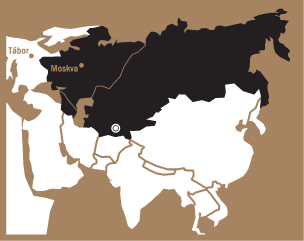 Bukhara has been one of the main centres of Iranian civilization during its history. Its architecture and archaeological sites form one of the pillars of Persian history and art. The region of Bukhara was for a long period
a part of the Persian Empire. The historic center of Bukhara has been listed by UNESCO as a World Heritage Site. It contains numerous mosques and madrassas.
Bukhara has been one of the main centres of Iranian civilization during its history. Its architecture and archaeological sites form one of the pillars of Persian history and art. The region of Bukhara was for a long period
a part of the Persian Empire. The historic center of Bukhara has been listed by UNESCO as a World Heritage Site. It contains numerous mosques and madrassas.
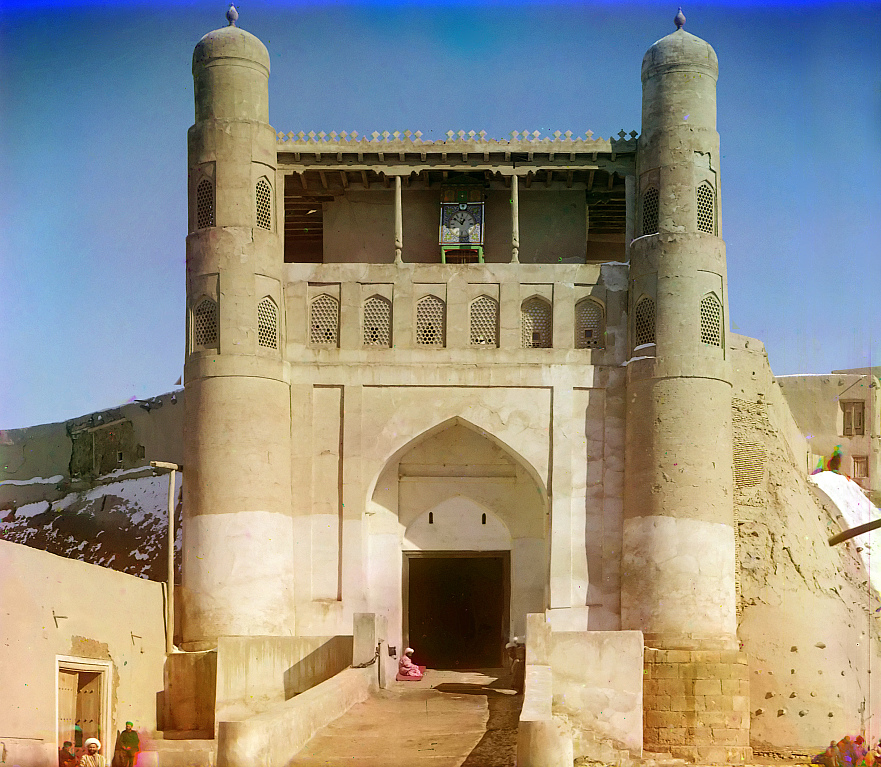
Въезд во дворец эмира в Старой Бухаре.
Entrance into the Emir's palace in Old Bukhara.
Library of Congress, Prints
and Photographs Division,
Prokudin-GorskiiCollection,
LC-DIG-prokc-21871. Digital color rendering by Jan Hubička based on color composite by Blaise Agüera y Arcas.
https://hdl.loc.gov/loc.pnp/prokc.21871
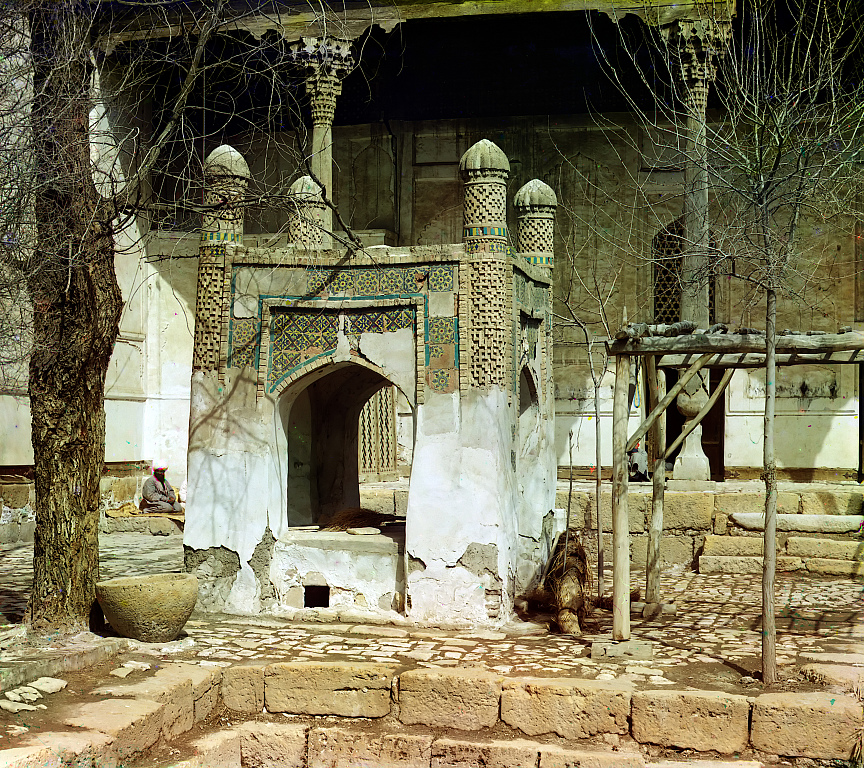
Священный колодезь внутри двора в Богоэддине.
Sacred well in the yard of the madrasah of Bogoeddin. Bukhara.
Library of Congress, Prints
and Photographs Division,
Prokudin-GorskiiCollection,
LC-DIG-prokc-21869. Digital color rendering by Jan Hubička based on color composite by Blaise Agüera y Arcas.
https://hdl.loc.gov/loc.pnp/prokc.21869
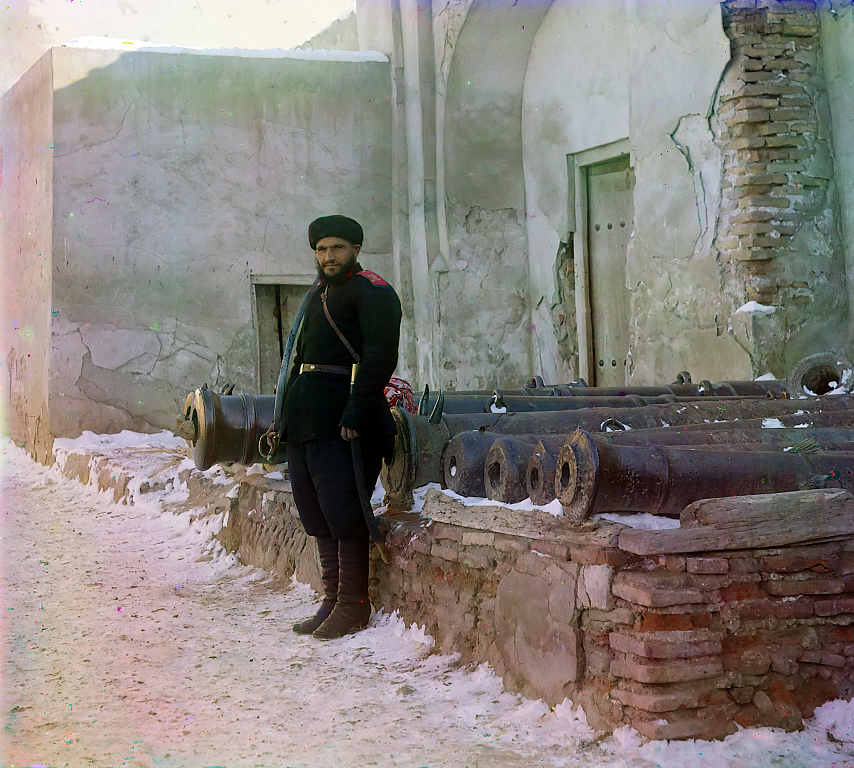
Часовой у дворца и старинные пушки.
Sentry at the palace, and old cannons. Bukhara.
Library of Congress, Prints
and Photographs Division,
Prokudin-GorskiiCollection,
LC-DIG-prokc-21872. Digital color rendering by Jan Hubička based on color composite by Blaise Agüera y Arcas.
https://hdl.loc.gov/loc.pnp/prokc.21872
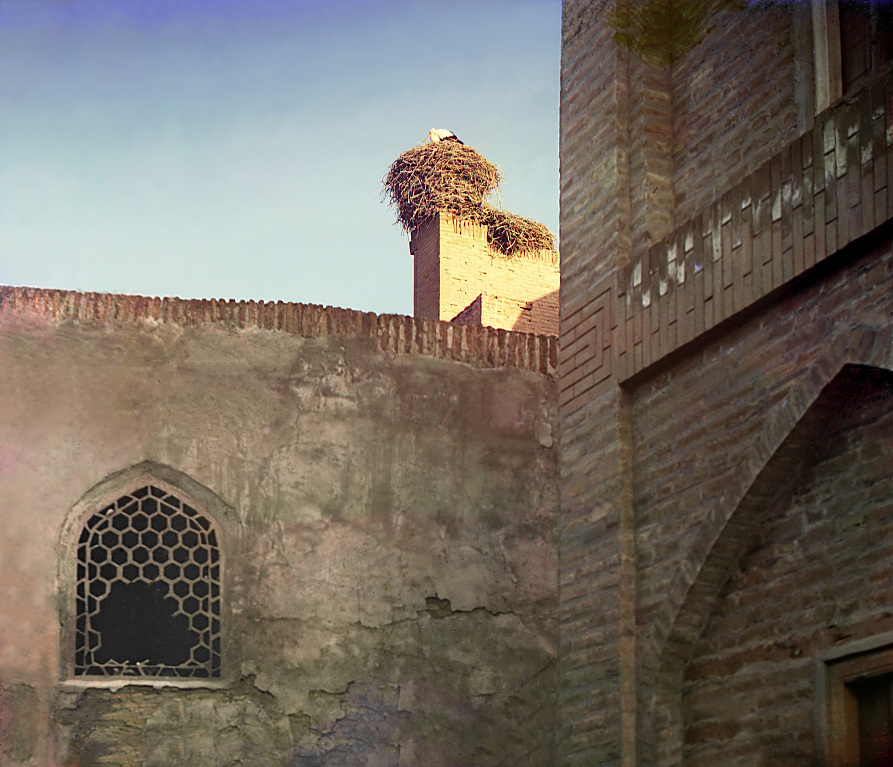
Аист (Этюд в Бухаре).
Stork. A study, in the town of Bukhara.
Library of Congress, Prints
and Photographs Division,
Prokudin-GorskiiCollection,
LC-DIG-ppmsc-03956. Digital color rendering by Walter Frankhauser.
https://hdl.loc.gov/loc.pnp/ppmsc.03956
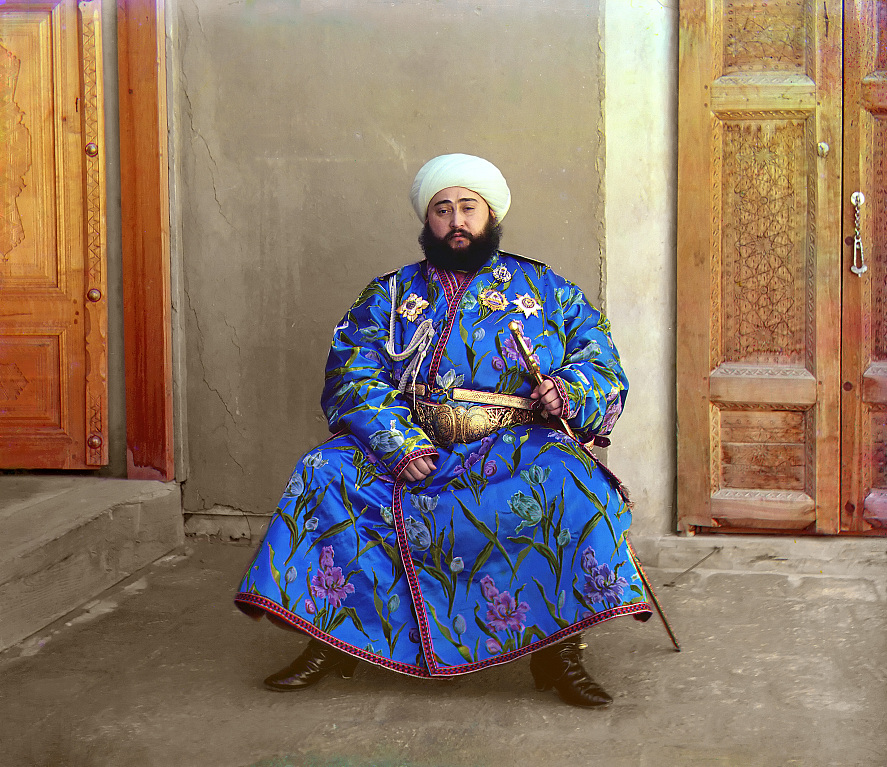
Эмир Бухарский.
Emir of Bukhara.
Library of Congress, Prints
and Photographs Division,
Prokudin-GorskiiCollection,
LC-DIG-ppmsc-03959. Digital color rendering by Walter Frankhauser.
https://hdl.loc.gov/loc.pnp/ppmsc.03959

В загородном дворце Эмира Бухарского.
In the country palace of the Emir of Bukhara.
Library of Congress, Prints
and Photographs Division,
Prokudin-GorskiiCollection,
LC-DIG-prokc-21900. Digital color rendering by Jan Hubička based on color composite by Blaise Agüera y Arcas.
https://hdl.loc.gov/loc.pnp/prokc.21900
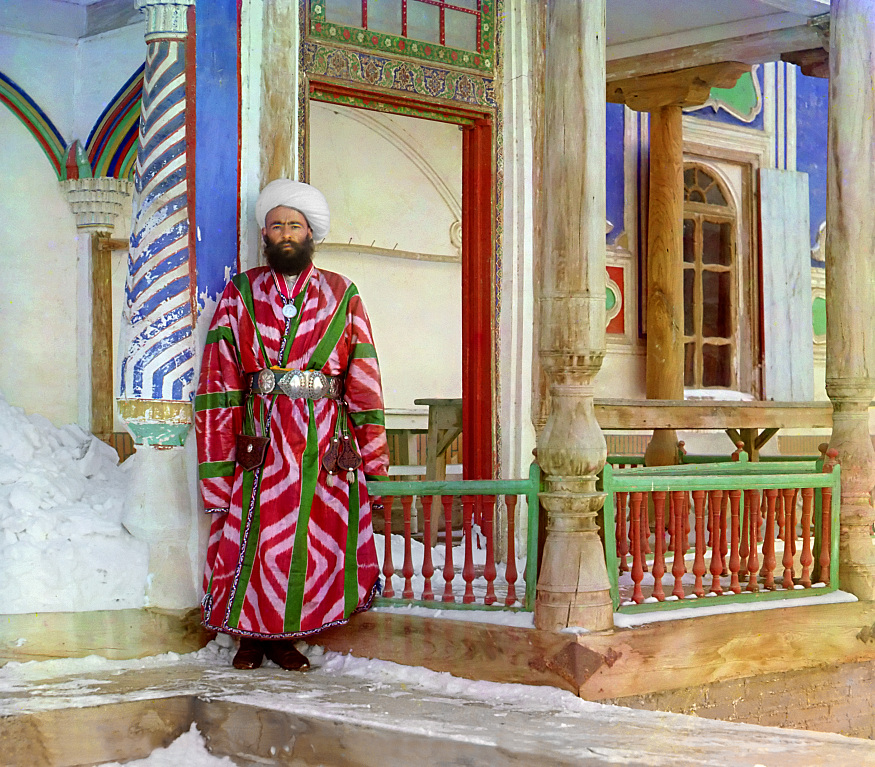
Бухарский чиновник.
An official in Bukhara.
Library of Congress, Prints
and Photographs Division,
Prokudin-GorskiiCollection,
LC-DIG-ppmsc-04653. Digital color rendering by Walter Frankhauser.
https://hdl.loc.gov/loc.pnp/ppmsc.04653
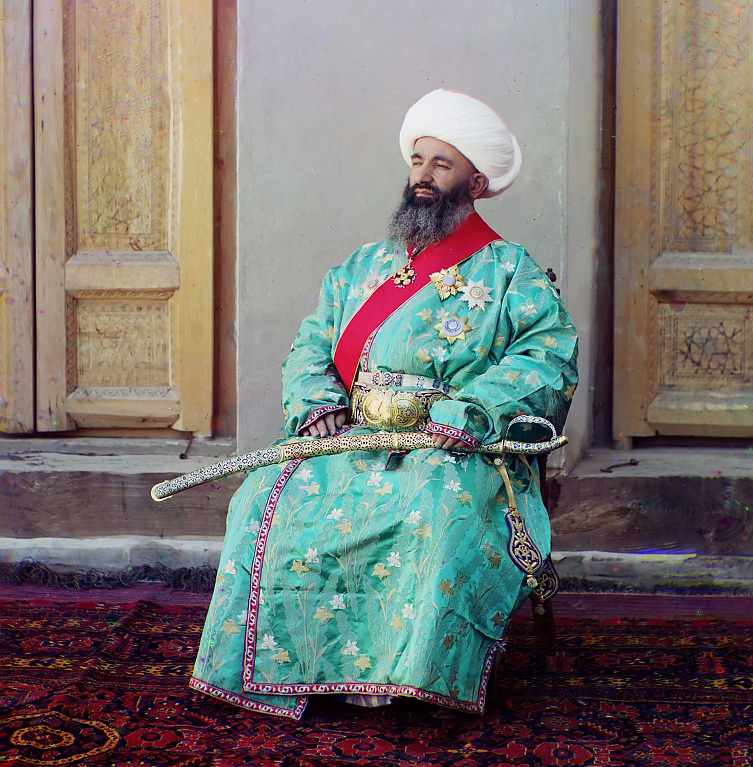
Куш-Бегги (Министр внутренних дел).
Kush-Beggi (Minister of Internal Affairs). Bukhara.
Library of Congress, Prints
and Photographs Division,
Prokudin-GorskiiCollection,
LC-DIG-prokc-21863. Digital color rendering by Jan Hubička based on color composite by Blaise Agüera y Arcas.
https://hdl.loc.gov/loc.pnp/prokc.21863
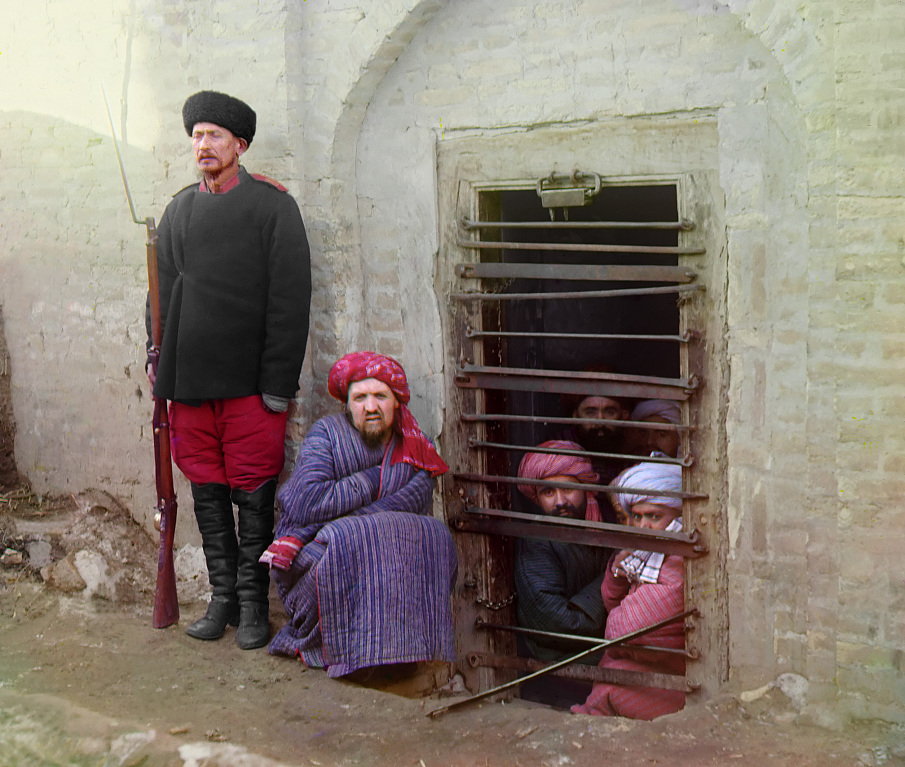
Неизвестно. В альбомах нет отпечатка.
Unidentified. No print in the albums.
Library of Congress, Prints
and Photographs Division,
Prokudin-GorskiiCollection,
LC-DIG-ppmsc-04416. Digital color rendering by Walter Frankhauser.
https://hdl.loc.gov/loc.pnp/ppmsc.04416
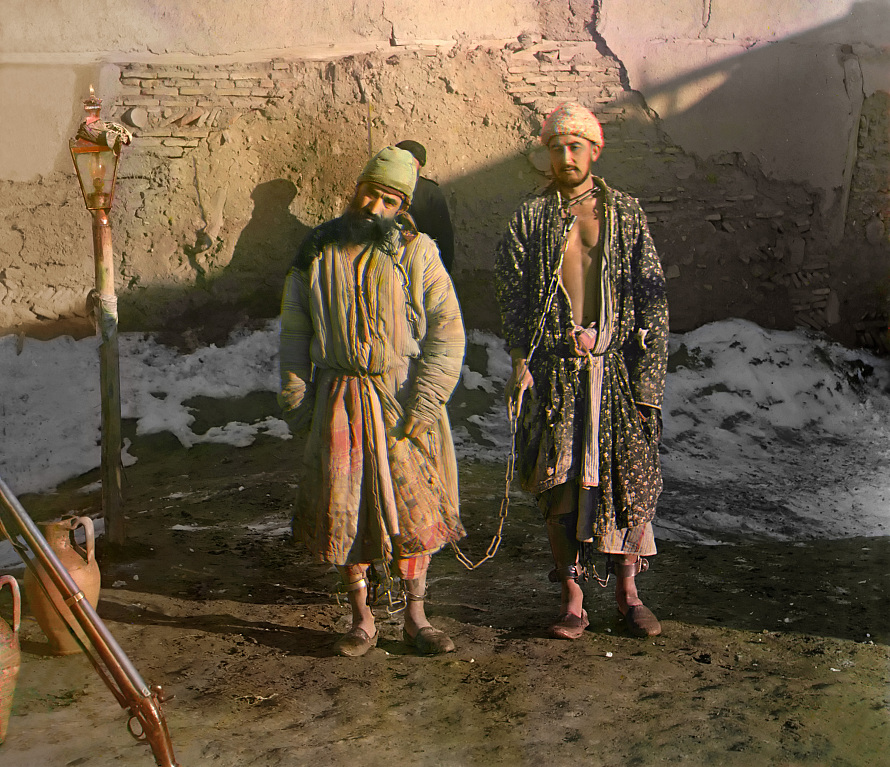
Неизвестно. В альбомах нет отпечатка.
Unidentified. No print in the albums.
Library of Congress, Prints
and Photographs Division,
Prokudin-GorskiiCollection,
LC-DIG-ppmsc-03969. Digital color rendering by Walter Frankhauser.
https://hdl.loc.gov/loc.pnp/ppmsc.03969